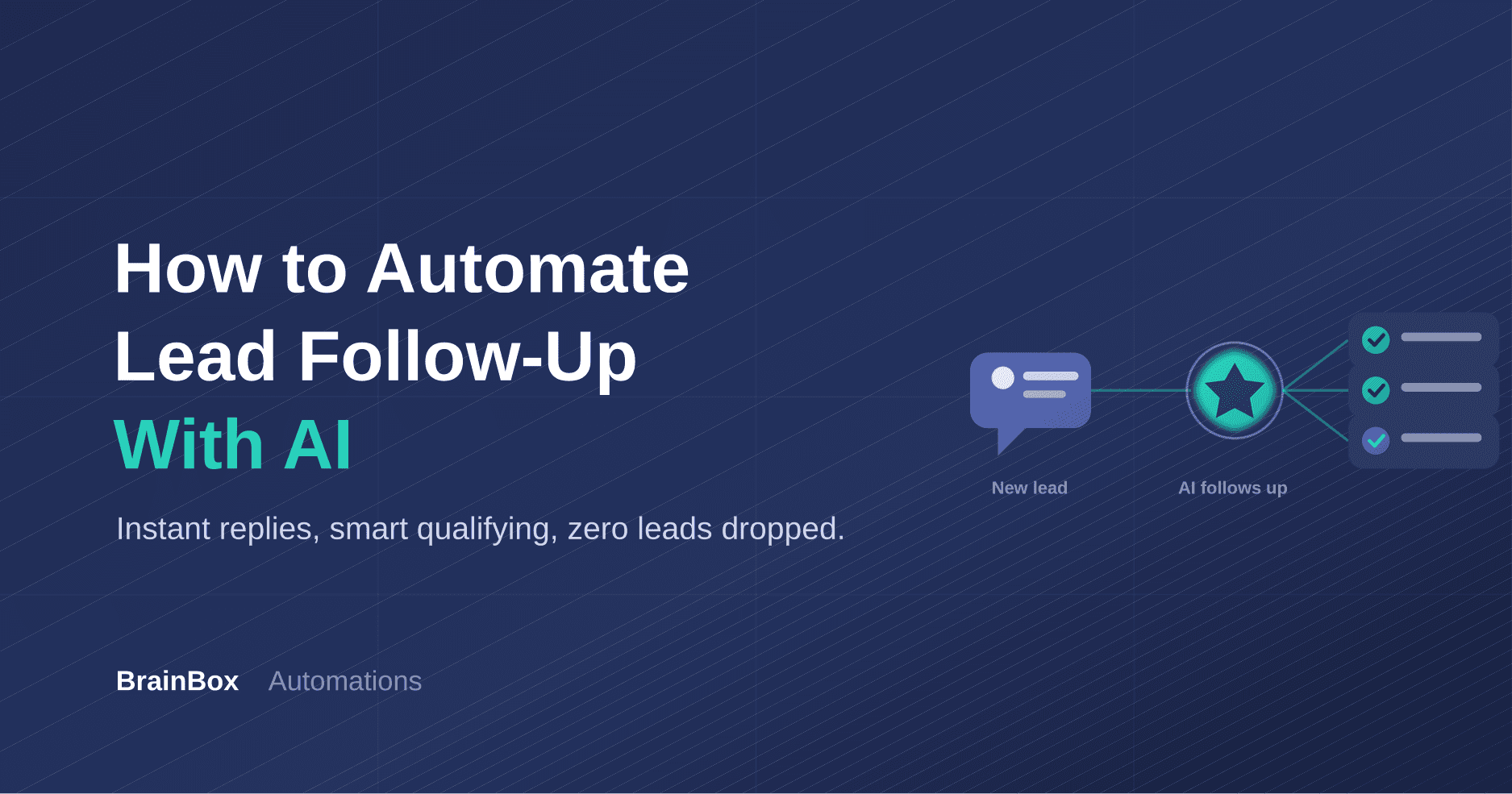
Most leads are not lost because the product was wrong. They are lost because nobody followed up fast enough, or often enough. The business that replies first and keeps in touch usually wins the deal, and that is exactly the work AI is good at. This guide walks through how to automate lead follow-up with AI, step by step, so no lead goes cold again.
Why lead follow-up is worth automating first
Follow-up is repetitive, time-sensitive, and easy to drop, the perfect candidate for automation. Reps get busy, leads come in after hours, and the fifth follow-up never gets sent. Meanwhile speed matters enormously: a lead contacted in minutes is far more likely to convert than one contacted hours or days later. Automating follow-up means every lead gets an instant, consistent response and a proper sequence, without anyone having to remember.
What AI adds over basic automation
Simple automation can already send an instant auto-reply. AI goes further, and that is where the deals are:
- It reads — an inbound message and understands what the lead actually wants, instead of sending everyone the same template.
- It qualifies — leads on more than a form field, scoring intent from what they say and do.
- It personalizes — each reply and the next step, so the follow-up feels written for them.
- It decides — when to hand a hot lead to a human and when to keep nurturing.
In short, basic automation sends messages. AI agents handle the judgment that used to need a person. If you are still weighing the two, our comparison of AI agents and chatbots covers the distinction in more depth.
How to automate lead follow-up with AI, step by step
Step 1: Capture every lead in one place
Connect your website forms, ads, chat, and inbox so every new lead lands in your CRM automatically, with no manual entry. If leads live in five places, follow-up will always leak. One capture point is the foundation.
Step 2: Send an instant first response
The moment a lead comes in, an automated first reply goes out, acknowledging them and setting expectations. With AI, that first message can reflect what they asked about rather than a generic thanks, we will be in touch. Speed to first contact is the single biggest lever here.
Step 3: Qualify and route automatically
Let the AI read the enquiry and score it: is this a ready buyer, a browser, or a bad fit? Hot leads get flagged and routed to the right rep immediately, with context attached, so nobody repeats themselves. Lower-intent leads enter a nurture track instead of eating a rep's time.
Step 4: Run a smart follow-up sequence
Set a sequence that keeps going until the lead replies or a limit is reached: a second touch a day later, a third a few days after, each personalized to the lead and spaced sensibly. The AI can adjust tone and content based on how the lead engaged, instead of firing the same three emails at everyone.
Step 5: Hand off to a human at the right moment
Automation should know its limits. When a lead shows buying signals, replies with a real question, or asks to talk, the agent alerts a human and hands over the full context. The rule is simple: AI handles the predictable follow-up, people handle the conversations that close.
Step 6: Measure and improve
Track response time, reply rates, and conversion. See which messages and timings work, and refine. Because the system is consistent, you can actually tell what is moving the numbers, something manual follow-up never lets you do.
Common mistakes to avoid
- Automating without personalization — generic blasts get ignored. The point of AI is that each touch feels relevant.
- No human handoff — never trap a hot, ready-to-buy lead in an automated loop.
- Too many messages — a relentless sequence annoys people. Space it and cap it.
- Not connecting your tools — follow-up automation only works if it is wired into your CRM, calendar, and inbox.
Getting started
You do not need to automate your whole funnel at once. Start with instant first response plus a simple qualify-and-route step, since that is where most deals leak, prove the lift in response time and conversion, then add the full sequence.
If you want a partner for that, BrainBox Automations builds AI agents and lead automation that capture, qualify, and follow up with every lead automatically, connected to the tools you already use.
Frequently Asked Questions
Can AI really follow up with leads on its own?+
Yes. AI can send an instant first response, qualify the lead from what they say, run a personalized follow-up sequence, and hand off to a human when the lead is ready. It handles the repetitive follow-up while your team handles the conversations that close.
What is the difference between automated and AI lead follow-up?+
Basic automation sends the same messages on a fixed schedule. AI lead follow-up reads each enquiry, understands intent, personalizes the response, and decides the next best step, so follow-up feels tailored rather than generic.
How quickly should you follow up with a lead?+
As fast as possible. A lead contacted within minutes is far more likely to convert than one contacted hours later, which is the main reason to automate the first response.
Will automated follow-up feel impersonal to leads?+
Not if it is built well. AI personalizes each message to what the lead asked and does, and hands off to a human at the right moment, so it feels responsive rather than robotic.
What tools do I need to automate lead follow-up?+
At minimum a CRM connected to your lead sources such as forms, ads, chat and inbox, plus an automation or AI layer on top. The key is that everything is integrated, so leads are captured and followed up without manual work.
Where should I start with lead follow-up automation?+
Start with instant first response and automatic qualification and routing, since that is where most deals leak. Prove the gain, then add a full personalized follow-up sequence.
Ready to stop losing leads to slow follow-up?
BrainBox Automations builds AI agents that capture, qualify, and follow up with every lead automatically. Book a meeting or get your free automation plan.